FIFA Women's World Cup 2027 · Rio de Janeiro
Women's World Cup 2027 in Rio de Janeiro: The Complete Fan Travel Guide
The Women's World Cup begins and ends in Rio. Brazil opens at the Maracanã on June 24, and on July 25 two teams return for the final—so the city sits at the emotional center of Brazil 2027.
Rio Will Frame the Entire Tournament
The Women's World Cup will begin in Rio de Janeiro and, 31 days later, end in the same city. Brazil will walk onto the Maracanã pitch for the opening match on June 24, and on July 25 two teams will return to play for the world title. For the first Women's World Cup ever held in South America, it is hard to imagine a more fitting stage, and the days around the football may be just as memorable: mornings on Ipanema Beach, sunset over Sugarloaf, Christ the Redeemer above the city, and a visit to the club where Marta began her professional career.
Rio is one of the host cities where it is worth giving yourself time around the match. You can build a short stay around the beach, one or two major sights, and a night at the Maracanã, or slow down and let the city become a larger part of the vacation. If your team brings you here, Rio should feel like much more than the place where the next game happens.
Rio Will Be at the Center of the Women's World Cup
Rio will host nine matches, including Brazil's opening game, a quarterfinal, a semifinal, and the final, keeping the city part of the tournament from its first night to its last. For supporters following their team, Rio may appear during the group stage or suddenly become the most important destination of the trip deep into July. The combination of the Maracanã and everything around it gives Rio a role that goes beyond simply hosting another set of matches.
The final is what makes Rio particularly special on the tournament map. No matter where a team starts its World Cup, every supporter dreams of eventually reaching this city on July 25. That gives Rio an emotional place in the tournament before the first ball is even kicked.
Women's World Cup 2027 Matches in Rio de Janeiro
The Maracanã hosts matches from June 24 through July 25. Kickoff times are still planning estimates until FIFA publishes them, but the dates and rounds are locked.
- June 24: Group A — Brazil
- June 26: Group D
- June 30: Group C
- July 3: Group G
- July 5: Group B
- July 7: Group F
- July 16: Quarterfinal
- July 21: Semifinal
- July 25: Final
Brazil's June 24 opener should give Rio one of the strongest nights of the group stage, because it is one of the few fixtures with a confirmed team before the December 11, 2026 draw. The quarterfinal, semifinal, and final make the city just as important later, especially for supporters following teams expected to make a deep run.
Rio Is One of Brazil's Great Football Cities
The Maracanã may be the symbol everyone recognizes, but Rio's football story stretches much further. Zico became a Flamengo icon here, Romário came through Vasco before leading Brazil to the 1994 World Cup title, and the city has produced or shaped generations of players who became part of Brazil's national-team history. Football feels less like an attraction in Rio than something woven into the identity of the city.
The women's game has its own story here. Vasco da Gama was one of Brazil's strongest women's clubs in the 1990s, with Pretinha becoming one of the defining players of that era, and a few years later a teenage Marta arrived from Alagoas to begin her professional career. She won a national youth title with Vasco and earned her first Brazil call-up while at the club, giving Rio a direct connection to the player who would eventually become the face of Brazilian women's football.
The Maracanã
Few stadiums carry more football history than the Maracanã. It was built for the 1950 World Cup, hosted the 2014 men's final, and staged the women's Olympic football final in 2016. In 2027, it will host both Brazil's opening match and the Women's World Cup final, adding another chapter to a stadium that has already seen some of the biggest moments in international football.
The most important thing for a World Cup traveler is that the stadium does not need to determine the rest of the trip. The Maracanã sits north of Rio's main beach neighborhoods, but it is accessible enough that Ipanema, Copacabana, and Leblon all remain practical places to stay. Choose the neighborhood where you want to spend your mornings and evenings, then make the stadium the focus of matchday.
Getting to Rio and the Maracanã
Most international visitors will arrive through Rio de Janeiro–Galeão International Airport, while Santos Dumont handles many domestic flights and can be useful when moving between Brazilian host cities. From the main beach neighborhoods, the metro and rail network provide practical access toward the Maracanã, so there is little reason to organize the entire stay around stadium proximity. For most supporters, transportation can remain a small part of the planning rather than one of the defining decisions.
Rio is much more enjoyable when you stay somewhere you actually want to wake up. A beach walk, breakfast nearby, and somewhere enjoyable to return after the match will affect the trip much more than shaving a few minutes off the stadium journey. That is why the best places to stay are concentrated around Rio's South Zone rather than around the Maracanã itself.
Where to Stay in Rio for the Women's World Cup
Ipanema: Best Overall
For most first-time visitors, Ipanema is the strongest all-around choice. It combines the beach, restaurants, cafés, and nightlife with good access to the rest of Rio, while still feeling like the version of the city many travelers came hoping to experience. You can start the day by the ocean, spend the afternoon sightseeing, and walk to Arpoador for sunset without turning every part of the day into another transportation plan.
Ipanema works particularly well for travelers who want the World Cup to feel like part of a broader Brazil vacation. The neighborhood is lively without being as intense as Copacabana, and there is enough happening nearby that you can enjoy a completely unplanned morning or evening. Families, couples, and groups of friends can all make it work without needing very different itineraries.
Leblon: Quieter and More Upscale
Leblon shares the same stretch of beach as Ipanema but feels calmer and more residential. It is a good choice for families, couples, or anyone who prefers quieter evenings, good restaurants, and a neighborhood where the pace slows down once the sightseeing is finished. You still have easy access to Ipanema and the rest of the South Zone, but the experience feels slightly removed from the busiest visitor areas.
The tradeoff is usually price. Leblon is one of Rio's more upscale neighborhoods, so accommodation can be more expensive and there are fewer large international hotels than in Copacabana. For travelers who prioritize comfort and a quieter beach experience, though, it can be worth the premium.
Copacabana: More Energy and More Hotel Choice
Copacabana is the classic Rio option and has the largest concentration of hotels, including familiar international brands. The neighborhood is busier and more tourist-oriented than Ipanema or Leblon, but it also has the scale and energy that can feel particularly fun during a World Cup. If hotel choice, loyalty points, or a recognizable chain matter, Copacabana is often the easiest place to start searching.
The long beachfront also makes the neighborhood convenient for travelers who want a straightforward Rio experience without spending much time researching where everything is. Restaurants, shops, and beach access are all easy to find, and the area is well connected to the rest of the city. Ipanema may have the edge for overall atmosphere, but Copacabana remains a very practical choice.
Three Hotels Worth Checking First
If you would rather start with a named hotel than a neighborhood list, these three are the ones I would check first. They keep you in Ipanema or Copacabana, so the Maracanã stays a matchday trip rather than something that has to shape where you sleep.
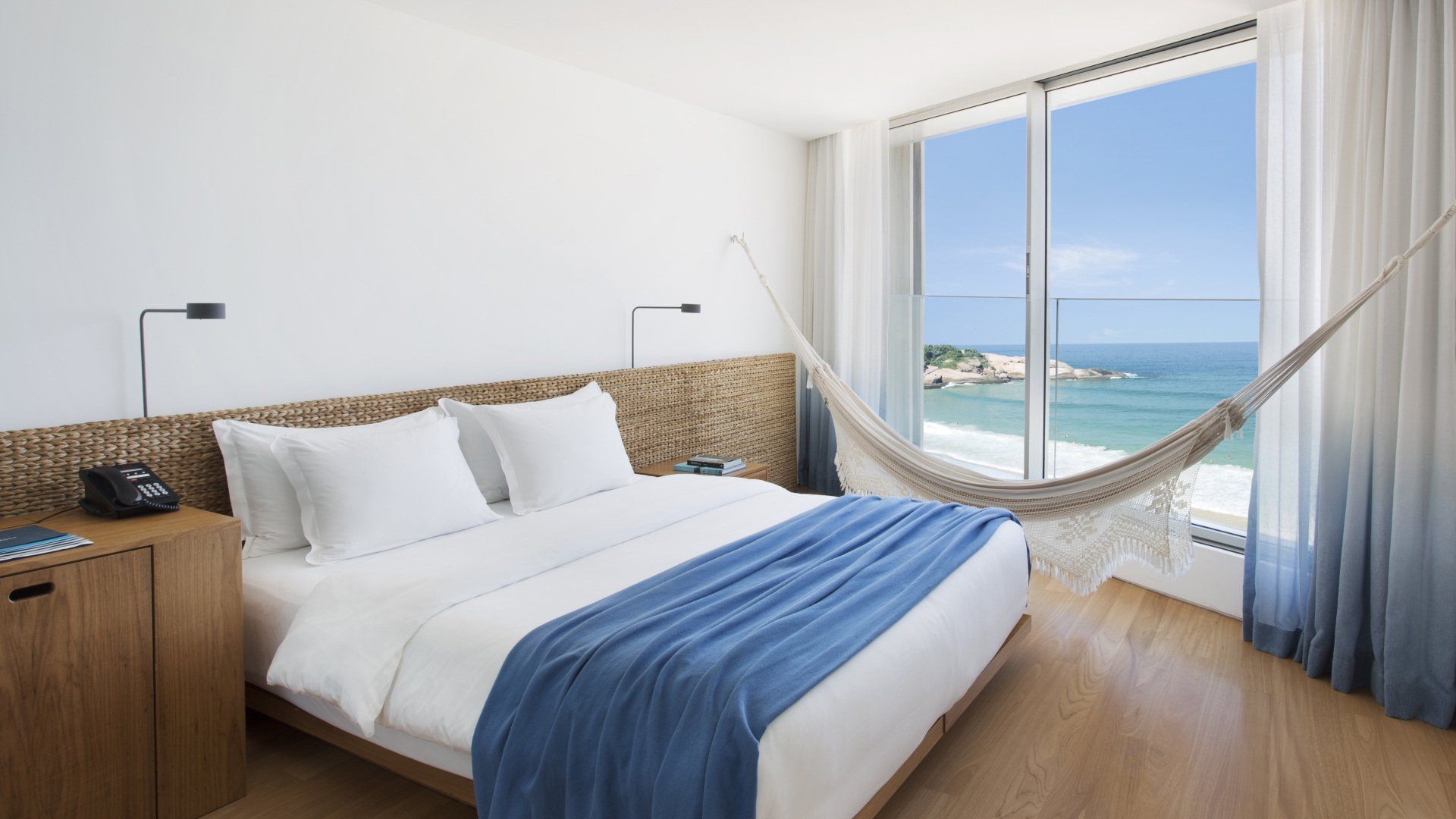
Arpoador · Ipanema
Hotel Arpoador
A stylish boutique base where Ipanema meets Arpoador — beach outside the door and one of Rio’s best sunset spots a short walk away.
Check availability on Hotel Arpoador
Ipanema
Ipanema Inn
A more affordable modern stay a short walk from the beach — good value when you want Ipanema without a luxury room you will barely use.
Check availability on Ipanema Inn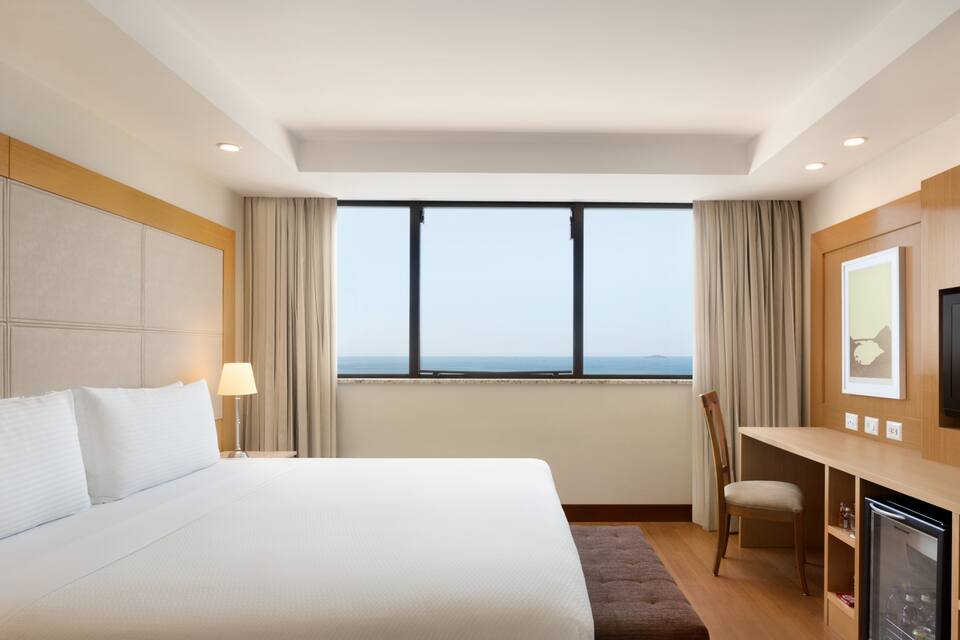
Copacabana Beach
Hilton Rio de Janeiro Copacabana
The familiar full-service chain on Copacabana Beach — pools, restaurants, and Hilton Honors when predictability matters most.
Check availability on Hilton
What to Do Between Matches
Rio is better when you resist trying to see everything. Pick one major experience for the day and leave enough time around it for the beach, food, or simply being outside, because some of the most memorable parts of the city are not attractions you need to schedule. A World Cup trip already has one big event built into it, so the days around the match do not need to become another race through a checklist.
Christ the Redeemer is the obvious first choice on a first visit. From Corcovado, the geography of Rio suddenly makes sense, with mountains, ocean, beaches, and neighborhoods folding into one another below you, while Sugarloaf Mountain offers a different perspective and is particularly memorable toward sunset. Between those bigger sights, spend a morning at Ipanema Beach, walk around Lagoa Rodrigo de Freitas, or combine Jardim Botânico with nearby Parque Lage.
With more time, explore the city through its neighborhoods instead of adding more major attractions. Santa Teresa gives you historic streets, hillside views, and a more bohemian side of Rio, while the waterfront and central neighborhoods offer a very different atmosphere from the beaches. The extra time is valuable because it lets Rio feel like somewhere you stayed rather than somewhere you moved through.
Follow Marta's First Steps at Vasco da Gama
For a Women's World Cup supporter, São Januário is the football stop worth adding outside the Maracanã. Vasco's women were one of Brazil's strongest teams during the 1990s, with Pretinha becoming one of the club's most important players, before Marta later began her professional journey there as a teenager. That makes the club part of the history of Brazilian women's football rather than simply another famous Rio stadium.
The Vasco museum includes the women's team within the wider club story, including Marta and Pretinha. Seeing that history during a Women's World Cup gives the visit a very different meaning from a generic football museum. You can watch the current generation at the Maracanã and then see where one of the greatest players in the history of the game first started building her career.
Rio with Kids During the Women's World Cup
Rio works particularly well for families because the itinerary does not need to revolve around children's attractions. The beach can be the easy default activity, especially in the morning, while the promenades around Ipanema, Leblon, and Copacabana give families plenty of space to walk and reset between bigger days. That makes it easier to keep matchday as the main event rather than adding another exhausting activity before or after it.
Jardim Botânico and Parque Lage work well when children need space to move, while Sugarloaf adds the excitement of the cable car without requiring an entire day. AquaRio gives families an indoor option, and slower beach or pool time can fill the days when everyone needs a break from sightseeing. The goal is not to entertain children every hour; it is to build enough flexibility into the trip that the World Cup remains fun for everyone.
June and July also fall during Rio's milder and generally drier winter season. Beach weather is still possible, but temperatures are more comfortable than the hottest summer months and evenings can feel cooler. That makes long days outdoors easier than many travelers may expect when they picture Brazil.
What Does a Rio Women's World Cup Trip Cost?
For two adults, plan around $130–$250 per night for a comfortable hotel, with premium beachfront properties costing more. Food and everyday spending should land around $50–$80 per person per day. FIFA has not published Women's World Cup 2027 ticket prices yet, so treat match spend as a planning reserve—roughly $15–$45 for the group stage, $25–$70 for a quarterfinal, $30–$90 for a semifinal, and $35–$120 for the final—until categories and sale dates are announced.
A comfortable three-night Rio stay for two adults should fall around $750–$1,400 before flights, while a one-week stay should be closer to $1,600–$3,000 before flights. Accommodation will create most of the difference, particularly for families who need larger rooms, but beach days and parks make it easy to balance more expensive sightseeing with inexpensive ones. Rio can be an expensive World Cup stop, but it does not need to become a luxury trip.
Should Rio Be Part of Your Women's World Cup Trip?
If your team plays here, give Rio enough time to enjoy the city around the match. A few days is enough to combine the Maracanã with the beach and one or two major experiences, while a longer stay lets you slow down, explore different neighborhoods, and add a football-history visit to São Januário. Leaving immediately after the game may look efficient on a tournament itinerary, but Rio is one of the cities where that efficiency can cost you the best part of the trip.
The football gives you a reason to come, but the city gives you a reason to stay. Rio already has the beaches, mountains, neighborhoods, and landmarks that make it one of the most recognizable destinations in the world, and the 2027 World Cup adds the Maracanã at its most important moments. If your team brings you here, make the city part of the memory rather than simply the backdrop.
Follow Your Team to Rio de Janeiro
Whether Rio belongs in your itinerary will depend on your team's route. Brazil already starts here, while other supporters will know after the December 11, 2026 draw whether Rio appears during the group stage or later in the tournament. Follow My Team connects those matches into one trip so you can see where Rio fits, what city comes before or after it, and how much time makes sense between games.
Instead of choosing cities independently, start with the team you want to follow and let the tournament build the route. Rio may become one stop along the way or the place where the entire journey ends. Either way, having the route in front of you makes it much easier to decide how many days you actually want to give the city.
Frequently Asked Questions
Don't miss the moment your trip becomes bookable.
Get important draw, schedule, ticket and trip-planning updates for the tournaments you follow.
Related reading
- Fan guide
How to Plan a Women's World Cup 2027 Trip to Brazil
Eight host cities, team-first itineraries, and what to prepare before the draw.
Read more → - Budget guide
How Much Should You Budget for a Women's World Cup 2027 Trip?
How much will a Women's World Cup 2027 trip to Brazil cost? See realistic budgets for US fans, from a 10-day Brazil holiday to following your team to the final.
Read more → - Qualification
Women's World Cup 2027 Qualification: Who's In and How the USWNT Can Qualify
18 teams are already in for Women's World Cup 2027 in Brazil. See who has qualified, Europe's playoff picture, and how the USWNT can book its place via Concacaf.
Read more → - Schedule guide
Women's World Cup 2027 Schedule: How It Shapes Your Brazil Trip
Match dates, host cities, and the travel windows that actually work.
Read more →